How to Clean Your Dishwasher Effectively
The dishwasher is a convenient appliance that can lose its efficiency if residue and grime build up. Regular cleaning helps remove food particles, grease, and mineral deposits, ensuring better cleaning performance and longer appliance life. This guide uses practical steps and common tools to keep a dishwasher fresh and functioning well.
Quick Answer
Run a cleaning cycle with a dishwasher interior cleaning kit or use a stainless steel dishwasher cleaning brush to scrub the door seal and rims. Finish with a rinse cycle using hot water to clear out loosened debris. For stubborn buildup, repeat every few months.
What You’ll Need
- Stainless steel dishwasher cleaning brush for scrubbing metal surfaces and door edges
- Dishwasher filter cleaning brush to remove debris from the filter
- Dishwasher interior cleaning kit for deep cleaning and descaling
<li Gloves and microfiber cloths for wiping
<li White vinegar or a manufacturer approved descaler (optional, depending on kit instructions)
 |
OXO Steel Dish Brush with Replaceable Head | |
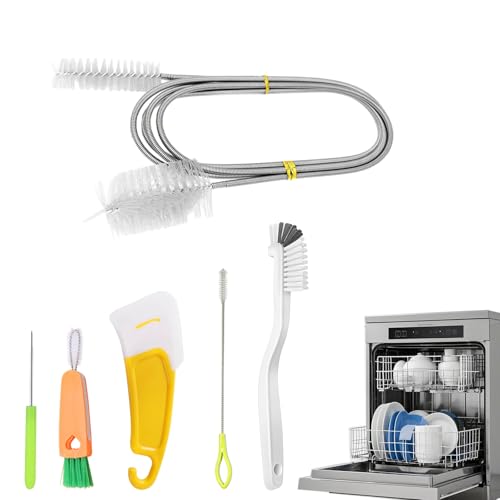 |
Dishwasher Cleaner Brush Kit – 6PCS Deep Cleaning Tools with Pick, Scraper, Straw Brush, Gap & Angle Brush, Flexible Tubes Brush for Spotless Dishwasher |
Before You Start
Ensure the dishwasher is cool and empty before cleaning. Remove racks to access all surfaces. Read the manufacturer manual for any specific cautions related to cleaning agents. Do not use harsh solvents or abrasive pads that could scratch stainless steel or plastic parts. Plan for a 60 to 90 minute cleaning window to thoroughly inspect seals, jets, and filters. Critical cautions include avoiding steam exposure on electronic controls and never mixing cleaning agents with chlorine bleach.
Step-By-Step: How To Clean Your Dishwasher
- Remove the racks and inspect the interior for leftover food debris. Clear larger pieces by hand using a damp cloth.
- Wipe the door gasket and the inner rim with a stainless steel dishwasher cleaning brush or a soft cloth to remove buildup around tight corners.
- Take out the filter assembly and rinse it under warm water. Use the dishwasher filter cleaning brush to loosen any stuck particles and keep the flow path clear.
- Check spray arms for clogs. If a spray hole is blocked, gently poke it with a toothpick or use the cleaning brush to clear the hole.
- Prepare a cleaning solution per kit instructions or simply place a dishwasher interior cleaning kit into the bottom of the tub and run a hot cycle. If using vinegar, place it in a cup on the upper rack and run a hot wash to help dissolve mineral deposits.
- After the cycle, wipe down the interior again with a microfiber towel to remove any remaining residue and dry the surfaces.
- Return the racks and run a short rinse cycle to ensure any dislodged particles are flushed away.
- Inspect the door seal after the cleaning. If any mold or residue remains, wipe with a diluted mild cleaner and dry completely to prevent reoccurrence.
- Schedule routine maintenance every 3 to 6 months depending on usage, especially in areas with hard water or frequent heavy-soiled loads.
- If odors persist, repeat the cleaning cycle or consider replacing the filter if it shows signs of wear or damage.
- Document any recurring issues such as poor draining or weak spraying as this helps determine if further service is needed.
- Dispose of the cleaning waste and store brushes and cloths in a dry area to prevent mold growth between uses.
Troubleshooting
| Symptom | Likely Cause | Fix | Prevention |
|---|---|---|---|
| Unpleasant odor after cleaning | Residual food in filter or tub | Thoroughly clean the filter and run a hot rinse with kit | Clean monthly and use a rinse aid if applicable |
| Poor drying | Blocked spray arms or mineral deposits | Inspect spray holes and clean; use descaler per kit | Use better rinse cycles and avoid overloading |
| Water not draining | Clogged filter or drain hose | Clear filter and inspect drain hose paths | Regular filter maintenance; check hoses for kinks |
| Poor cleaning performance | Dirty spray arms or misaligned racks | Clean spray arms; realign and secure racks | Remove large food chunks before loading |
Common Mistakes
- Using abrasive pads on stainless steel surfaces
- Overloading the dishwasher, blocking spray arms
- Mixing cleaning agents without following kit directions
- Neglecting filter maintenance leading to repeat clogs
- Relying on a single deep clean cycle without periodic checks
Tips For Best Results
- Run a hot water cycle with an interior cleaning kit at least every 3 to 6 months
- Use a rinse aid if the dishwasher lacks automatic drying performance
- Keep the door gasket clean and dry to prevent mold growth
- Choose the correct cycle for the load type to maximize cleaning efficiency
- Consider water hardness when descaling to choose the right product and frequency
Call A Professional
Stop signs to contact a professional include persistent odors after multiple cleanings, visible mold growth in areas not reachable by user maintenance, unusual noises during operation, or repeated drainage problems despite proper cleaning. Seek service if electrical controls fail to respond or if the dishwasher leaks around the base during cycles.
FAQ
How often should I clean my dishwasher interior?
A routine deep clean every 3 to 6 months is recommended, with more frequent cleaning in areas with hard water or high usage.
Can I use vinegar to clean my dishwasher?
Yes, vinegar can help dissolve mineral deposits, but follow kit instructions and avoid mixing with other cleaners to prevent chemical reactions.
What should I do if the filter is damaged?
Replace the filter promptly to maintain proper drainage and cleaning performance.
Is it necessary to remove the racks for cleaning?
Yes, removing racks gives full access to all interior surfaces, seals, and spray arms for thorough cleaning.
Buying Guide
When selecting tools to keep a dishwasher clean, consider size compatibility with the machine, ease of use, and compatibility with materials. Key factors include:
- <bSize and fit: Choose brushes that reach tight corners and around the door gasket without scratching surfaces.
- <bNoise and convenience: Handheld brushes are quiet and simple to store; interior cleaning kits often bundle multiple tools for versatility.
- <bEnergy and water impact: Regular cleaning reduces running times and improves efficiency, potentially lowering energy use over time.
- <bControls and safety: Avoid harsh cleaners around electronic controls; use kit guided products in accordance with manufacturer instructions.
- <bPlacement and storage: Keep cleaning tools in a dry area near the dishwasher for quick access and to prevent mold growth.
When comparing options, evaluate how well a kit or brush set addresses filter access, spray arm clearance, and gasket cleaning. Consider whether a solution includes both a filter cleaning brush and a stainless steel cleaning brush for a comprehensive approach. For households with hard water, descaling capability within the kit can offer long term benefits. Finally, assess user reviews for reliability and the ease of maintenance over time.
Leave a Reply