How to Clean Leather Car Seats With Vinegar
Leather car seats offer premium aesthetics and long-term durability, but keeping them clean requires care to avoid drying or staining the material. Vinegar can be a gentle option when used correctly, especially for light cleaning and deodorizing. This guide explains a practical method using vinegar in combination with safe, car-specific cleaners and applicator cloths to maintain color, softness, and protection.
Quick Answer
Mix a small amount of distilled white vinegar with water (1:3) and test on a hidden spot. Use a pH-neutral leather cleaner for cars to pre-treat tougher grime, then wipe with a microfiber cloth. Avoid saturating the seat and always follow with a conditioner to maintain suppleness.
What You’ll Need
The following tools and products help you clean leather car seats safely and efficiently. Gather them before you start to streamline the process.
- Leather car seat cleaner spray bottle
- Microfiber cloth set
- PH-neutral leather cleaner for cars with included applicator cloths
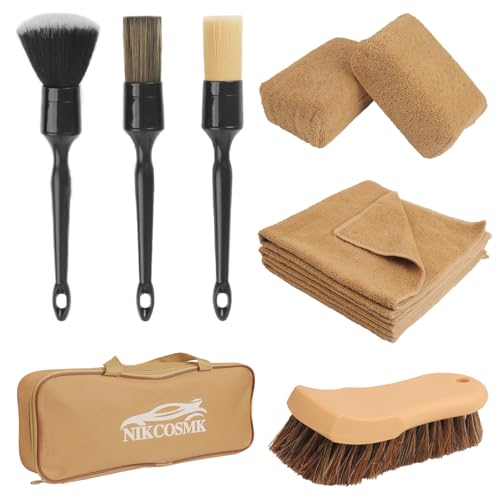
- Leather conditioning kit for cars with microfiber cloths and brush


Before You Start
Prepare a clean, well-lit workspace and test the vinegar solution on an inconspicuous area of the seat. If the seat has aniline or semi-aniline finishes, avoid aggressive scrubbing and excess moisture. Use a spray bottle for controlled application and work in small sections. Do not saturate leather; moisture can seep into seams and cause staining or mold. Allow treated areas to air-dry naturally away from direct sunlight or heat sources.
Step-By-Step: How To Clean Leather Car Seats With Vinegar
- Vacuum the seats thoroughly to remove loose dirt and debris before applying any solution.
- Prepare the vinegar solution: combine distilled white vinegar with water in a 1:3 ratio in a spray bottle.
- Test a hidden spot: spray lightly on a small area to ensure no discoloration or damage occurs.
- Apply a light mist of the vinegar solution to a microfiber cloth, not directly onto the leather.
- Wipe in gentle, circular motions to lift surface grime without soaking the leather. Allow a brief air-dry time.
- Use a pH-neutral leather cleaner for cars for any stubborn stains, following the product’s instructions and using the included applicator cloths.
- Wipe again with a clean microfiber cloth to remove residue and dry the surface.
- Apply the leather conditioning kit as directed, focusing on edges and seams to restore suppleness and protect against cracking.
- Let the seats dry completely in a ventilated area before use, typically 1–2 hours depending on environment.
- Return the car to normal use and avoid direct sun until the conditioner fully sets.
- Regular maintenance: repeat every 4–6 weeks or as needed to maintain cleanliness and finish.
- For persistent odors, repeat the vinegar-wipe followed by conditioner, ensuring full drying between steps.
Troubleshooting
| Symptom | Likely Cause | Fix | Prevention |
|---|---|---|---|
| Streaks or white residue | Excess cleaner or insufficient drying | Buff with a dry microfiber cloth; re-wipe lightly with the vinegar solution and dry | Use minimal solution; ensure complete drying |
| Color fading or blotching | Undertone sensitivity or over-wetting | Spot-test first; dilute vinegar further; avoid prolonged wetting | Always test on hidden areas prior to full use |
| Residual odor after cleaning | Inadequate deodorizing or lingering cleaner | Re-clean with fresh microfiber cloth and apply conditioner | Use proper pH-neutral products in combination with vinegar |
| Leather feels stiff after cleaning | Over-drying or insufficient conditioning | Apply conditioner and rub in thoroughly | Maintain regular conditioning schedule |
Common Mistakes
- Using straight vinegar or high concentrations that can dry leather
- Soaking seats with moisture, especially around seams and stitching
- Skipping a test patch and applying products too aggressively
- Forgetting to condition after cleaning, leading to stiffness and cracking
- Using non-leather-specific cleaners on treated surfaces
Sticking to a gentle approach reduces risk and improves results without compromising the leather’s longevity.
Tips For Best Results
- Always use a spray bottle for controlled application of vinegar solutions
- Pair vinegar cleaning with a pH-neutral leather cleaner to protect finishes
- Work in shaded areas to prevent rapid drying that can leave marks
- Dust and vacuum regularly to minimize buildup that requires stronger cleaning
- Finish with a high-quality leather conditioner to restore moisture
Call A Professional
Consider professional service if you notice significant color change, deep stains, or cracking. Seek a pro if the leather shows extensive wear, water damage, or persistent odors that do not respond to standard cleaning and conditioning. Stop using vinegar if you observe any negative reactions after a patch test and contact a certified detailer for guidance.
FAQ
Is vinegar safe for all leather car seats?
Vinegar is generally safe when diluted and used carefully, but some finishes may react differently. Always patch-test first and follow with a conditioner.
Can I use vinegar without any other cleaners?
Light cleaning can be done with vinegar solution, but for tough stains, combine with a pH-neutral leather cleaner designed for cars.
How often should I clean leather car seats?
Light cleaning can be done monthly; deep cleaning with conditioner every 4–6 weeks helps maintain flexibility and color.
Do I need to condition after every cleaning?
Yes, conditioning maintains moisture and protects against cracking after cleaning, especially when using cleaners.
What’s the best way to dry leather after cleaning?
Air-dry in a shaded area with adequate ventilation; avoid sunlight and heat sources that can dry and crack leather.
Can I use a regular microfiber cloth for cleaning?
Yes, but use clean, soft microfiber cloths to prevent scratching and distribute product evenly.
What if the stain is stubborn?
Use the pH-neutral cleaner with its applicator cloths and repeat as needed, ensuring proper drying between steps.
Buying Guide
Choosing the right products for leather car seats involves assessing several factors. Start with the size and coverage: consider a kit that includes multiple applicator cloths and enough product for several detailing sessions. Look for a noise level friendly solution set—no noisy gadgets, just sprayers and cloths. Energy efficiency is less critical here, but selecting compact, ready-to-use bottles saves time. For controls, a spray bottle with a fine mist helps distribute vinegar evenly without oversaturating. Consider placement: store kits in the trunk or a garage cabinet for quick access during cleaning sessions. Compare cleaning efficacy, material compatibility, and conditioning compatibility across products to ensure a balanced approach to maintenance.
Leave a Reply